Spray Foam Insulation in Ahwatukee, AZ
Professional spray foam insulation for Ahwatukee homes, garages, additions, metal buildings and commercial properties.
Insulation Contractor Serving Ahwatukee, AZ
Ahwatukee sits in a bowl of rock and sun. The Foothills neighborhoods climb the slopes of South Mountain, the Lakewood and Club West homes spread along the base, and every one of them takes direct desert exposure from a landscape that offers almost no shade. Most of this community was built in the 1980s and 1990s, which means the housing stock is now thirty to forty years into a losing fight with original insulation that was thin when it was installed and thinner now. Tempe Spray Foam Insulation serves all of Ahwatukee along with nearby Tempe, Chandler, and Phoenix, and we focus on the full range of insulation work: spray foam, blow-in, batts, radiant barriers, and removal.
What makes Ahwatukee different from the flatlands of the East Valley is orientation. Hillside lots mean western and southern exposures that absorb afternoon sun off the mountain long after flatter neighborhoods start cooling. Vaulted ceilings, split-level floor plans, and big view windows were the design language of the era, and all three create insulation challenges that a standard attic top-off does not solve. If your home bakes until ten at night in the summer, call (480) 573-6554 for an evaluation.
The South Mountain Effect on Home Comfort
Homes built against South Mountain deal with heat from two directions. The roof takes direct solar load all day, and the rock faces behind and beside hillside homes radiate stored heat back toward the structure well into the evening. Exterior walls on the uphill side of a Foothills home can stay warm to the touch hours after sunset. That heat conducts inward through any weakness in the envelope, and in 1980s construction, the envelope has plenty of weaknesses.
The original insulation in most Ahwatukee homes from this era was fiberglass batts in the walls and blown or batt material in the attic, installed to the standards of the time. Those standards were written for a different era of energy prices and a different understanding of air sealing. Forty years of thermal cycling, roof work, and attic traffic later, what remains is often compressed, gapped, or missing entirely around penetrations and edges.
This is why two identical floor plans in Ahwatukee can perform completely differently. The flat-lot home with a northern orientation coasts. The hillside home with a west-facing great room and a vaulted ceiling suffers. The fix starts with understanding which exposures are doing the damage, then targeting insulation and air sealing where they will actually move the needle.
Insulation Removal Comes First in Older Ahwatukee Homes
In a community where much of the housing is three or four decades old, removal is often the real starting point. Original blown fiberglass in a 1988 attic has usually been disturbed by reroofing, HVAC replacements, and generations of rodents that found their way in through aged vents and eave gaps. Insulation that has hosted rodents is not something you bury under new material. It comes out.
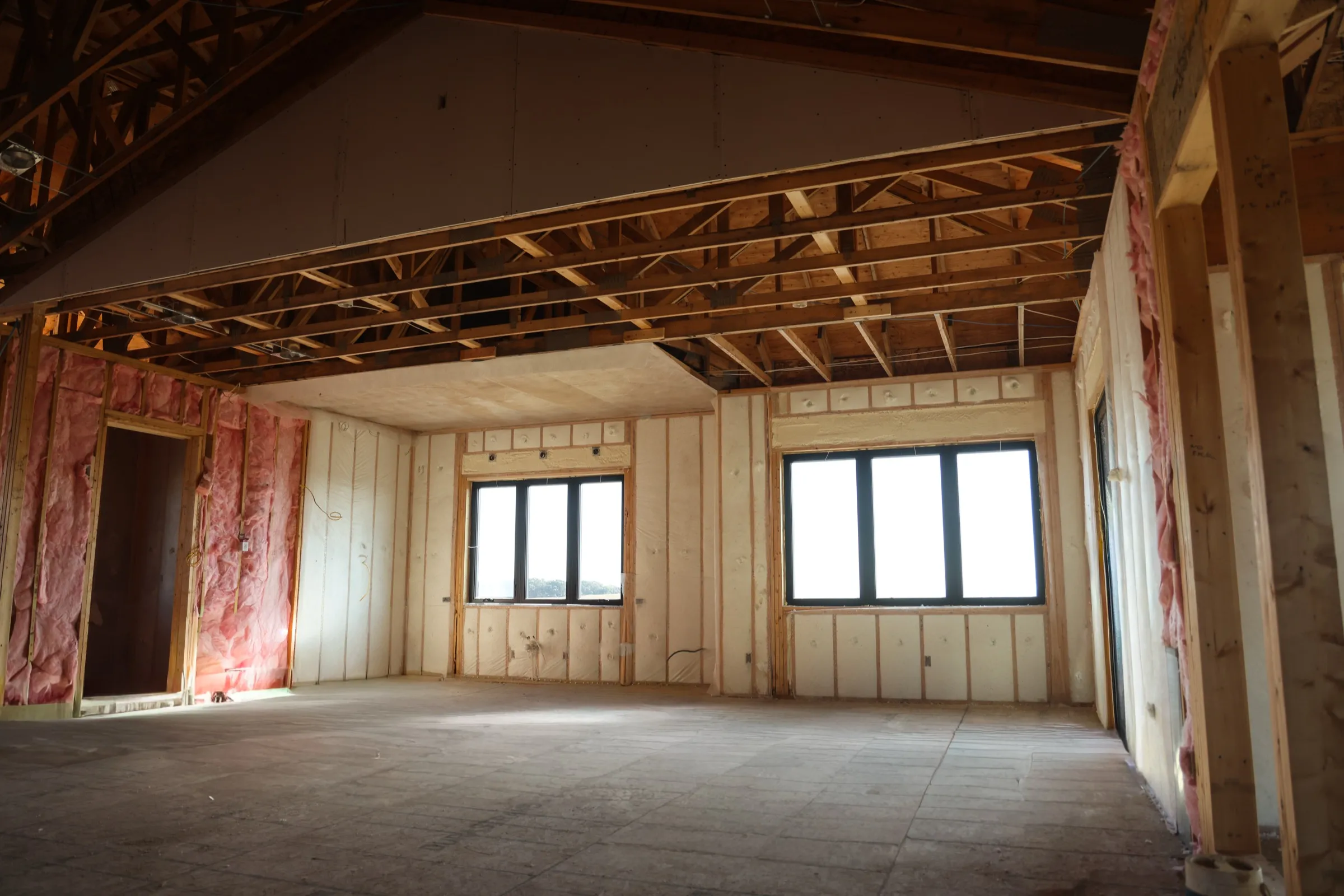
Our removal process vacuums the old material directly from the attic to containment outside the home. With the attic floor bare, two things become possible that were not before: a complete air sealing pass over every top plate, wire hole, plumbing penetration, and light fixture, and an honest look at the condition of the drywall ceiling and ductwork. Homeowners are frequently surprised by what forty years of attic traffic leaves behind, and by how much air sealing opportunity was hiding under the old insulation.
After removal and sealing, the attic is a blank canvas. That is the moment to decide between blown-in to proper depth, a spray foam roof deck application, or a combination with a radiant barrier. Doing the work in this order is the difference between an upgrade and a cover-up. To schedule removal and a full attic assessment, call (480) 573-6554.
Radiant Barriers and Spray Foam for Sun-Baked Rooflines
Ahwatukee is one of the strongest cases in the Valley for radiant barrier installation. Roof surfaces here, especially the tile roofs common to Foothills homes, can reach extreme temperatures under summer sun, and much of that heat arrives in the attic as radiant energy rather than conducted air temperature. A radiant barrier installed under the rafters reflects that energy back toward the roof before it can soak into the insulation below. On west and south facing roof planes, the effect is noticeable.
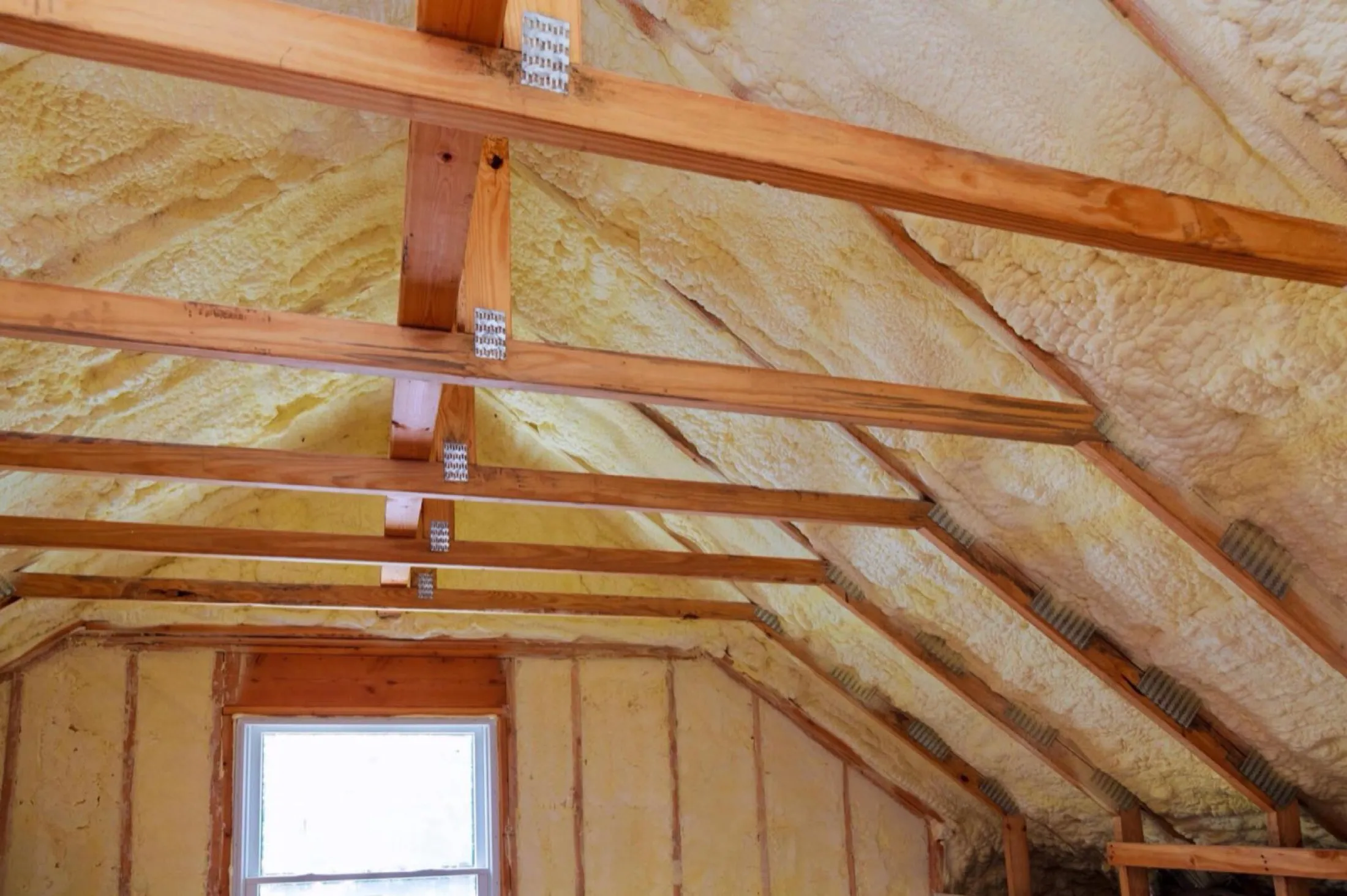
For homeowners ready for a bigger step, open-cell spray foam on the underside of the roof deck addresses the same problem more aggressively. Instead of reflecting radiant heat and venting the rest, foam converts the attic into a semi-conditioned space within the home's thermal boundary. This matters enormously in Ahwatukee homes where the air handler and ductwork live in the attic, which is most of them. Your cooling equipment stops fighting a 145-degree environment and starts operating in something far closer to room temperature.
Vaulted ceilings deserve special mention. Many Ahwatukee great rooms and master suites have cathedral ceilings with shallow rafter cavities that were barely insulatable with 1980s methods. Closed-cell spray foam delivers high R-value in limited depth and air seals in one step, which is often the only practical way to fix a hot vaulted ceiling without tearing off the roof. The right answer depends on your roof structure and budget, and we will tell you plainly which option earns its cost in your specific house.
Blow-In, Batts, and Whole-Home Insulation Services
For Ahwatukee attics with conventional flat ceilings and good access, blown-in insulation remains the most cost-effective path to modern performance. After air sealing, we blow fiberglass or cellulose to depths targeting R-38 to R-49, the range recommended for our climate. The low-slope roofs and tight attic spaces common in some 1980s ranch-style floor plans here require hose work and patience rather than speed, and tight clearance is exactly where installer experience shows.
Batt insulation earns its keep in Ahwatukee in garages, additions, and remodel work where wall cavities are open. Many homes here have converted garages or enclosed patios that were finished years ago with little or no wall insulation. Retrofitting those spaces with properly fitted batts, or with dense-packed blown material where the drywall is staying, turns a room that was unusable four months a year into actual living space.
Exterior walls are the other blind spot. The block-and-frame construction mix in Ahwatukee means some walls can be dense-packed and some cannot, and block walls with furring strips have their own quirks. We assess wall insulation case by case rather than promising a one-size solution. Across every service, from removal to blow-in to foam to radiant barriers, the approach is the same: find where the heat is actually getting in, then close that path. Homeowners in Tempe and Chandler get the same assessment process.
What an Ahwatukee Insulation Project Looks Like
Every job starts with an evaluation. We look in the attic, check depth and condition of existing material, note the orientation and exposures of the home, look at where the ductwork runs, and identify the specific weaknesses. A hillside two-story in the Foothills gets a different recommendation than a single-story ranch near Lakewood, because the heat sources are different.
From there you get a written quote that breaks out removal, air sealing, material, and any add-ons like radiant barrier or hatch covers. Typical market ranges for this kind of work in the Phoenix area run from the low thousands for straightforward blow-in jobs up to considerably more for full removal plus spray foam conversions on larger homes. We do not quote prices sight unseen, because attic conditions drive cost more than square footage alone.
Most Ahwatukee projects take one to two days. You can stay in the home while we work. We protect the path from the access point to the truck, and the vacuum equipment for removal stays outside. When we leave, the only evidence we were there is an attic that finally does its job and rooms that hold temperature the way they should. Call (480) 573-6554 to get on the schedule.
West-Facing Exposure on South Mountain Hillside Lots: The Wall Insulation Problem
Ahwatukee homes tucked against South Mountain get some of the most brutal afternoon sun exposure in the valley. West and southwest facing walls on hillside lots take direct sun from midday until sunset in the summer, and that wall surface can reach temperatures that turn it into a slow-release radiator pointed at your living room. In these homes, attic insulation alone does not solve the comfort problem, because a large share of the heat gain is coming through walls, not the ceiling.
The frustrating part is that many Ahwatukee homes from the 1980s and 90s have wall cavities that were insulated minimally by today's standards, and some have settled or slumped batts that leave the top third of the wall effectively uninsulated. Dense packing existing walls through small access holes can restore those cavities without opening up drywall, and it is one of the few upgrades that directly addresses west-wall heat gain.
If your home sits on a hillside lot and the rooms with western exposure are unbearable after 2 p.m. no matter what the thermostat says, the walls deserve a look alongside the attic. We can assess both in one visit and tell you honestly which one is driving the problem. Call (480) 573-6554 to schedule.
HOA-Friendly Upgrades: Comfort Improvements That Never Touch Your Exterior
Ahwatukee has no shortage of HOAs with architectural rules about exterior modifications, and some homeowners assume that means energy upgrades are off the table or require committee approval and delays. The good news is that the highest-impact insulation and air sealing work is completely invisible from the street. Attic insulation, attic air sealing, duct sealing, radiant barriers under the roof deck, and dense packing wall cavities from the interior all happen inside the home's envelope. Nothing changes about your roofline, your stucco, your paint color, or your windows.
This matters practically, not just bureaucratically. Attic work is where most of the heat gain in a single-story Ahwatukee home originates, so the upgrades your HOA has no say over are also the upgrades with the best return. Sealing the ceiling plane and bringing attic insulation to proper depth can usually be done in a day, with equipment and material coming through the attic hatch, leaving zero evidence outside.
For homeowners in the stricter communities near the Foothills, this is the path we recommend: do the invisible work first, live with it through a summer, and only then decide whether anything more involved is worth pursuing through the architectural committee. Most of the time, the attic and duct work solves enough of the problem that the question never comes up again.
Frequently Asked Questions
Q: My Ahwatukee home was built in 1987. Is the original insulation still doing anything?
It is doing something, but likely far less than its rated performance. Blown material from that era has typically settled significantly, and batts have often slumped or been pulled aside for wiring and duct work over the decades. An inspection will show whether a top-off works or whether removal and a fresh start is the smarter investment.
Q: Why does my house stay hot hours after the sun goes down?
That is stored heat releasing. Roof surfaces, exterior walls, and in hillside areas the rock of South Mountain itself absorb heat all afternoon and radiate it back into the evening. If your insulation and air sealing are weak, that stored heat conducts straight into your living space long after the outdoor air has cooled.
Q: Does a radiant barrier actually work, or is it a gimmick?
In the right application it works well. A radiant barrier reflects radiant heat from the roof deck before it reaches your insulation, and on sun-exposed roof planes in Ahwatukee the conditions are ideal for it. It is a complement to adequate insulation depth, not a replacement for it.
Q: Can you insulate a vaulted ceiling without removing the roof?
Often, yes. Closed-cell spray foam applied to the underside of the roof deck insulates and air seals the rafter cavity from below. Whether it fits your situation depends on the roof structure and ventilation design, which we assess during the evaluation.
Q: How disruptive is insulation removal?
Less than most people expect. The vacuum hoses run from the attic access directly to the truck outside, containment catches the material, and the living space stays clean. Most removal and reinsulation projects wrap in one to two days and you can remain home the whole time.
Q: What R-value does an Ahwatukee attic need?
The general recommendation for our climate zone is R-38 to R-49. Given the sun exposure many Ahwatukee homes deal with, hitting the upper end of that range, combined with solid air sealing, is money well spent.
Q: Will this help with the dust in my house?
Usually, yes. A significant share of household dust in older Valley homes arrives through air leaks that pull attic air into the living space. Thorough air sealing during an insulation project closes those pathways.
Q: Do you serve areas outside Ahwatukee?
Yes. We work across Ahwatukee, Tempe, Chandler, Gilbert, and Mesa. Call (480) 573-6554 to schedule an evaluation anywhere in our service area.
Insulation Services Available in Ahwatukee
Need Spray Foam in Ahwatukee?
Talk with our team about your home, building or upcoming project.
Common Questions
Do you provide insulation services in Ahwatukee?
Yes. Tempe Spray Foam Insulation provides residential and commercial insulation in Ahwatukee, including spray foam insulation, blow-in insulation, batt insulation, radiant barriers, insulation removal, with free written estimates.
What type of insulation is best for Ahwatukee homes?
It depends on the building. Attics, walls, garages and additions each hold and lose heat differently, so we assess the space during a free estimate and recommend the material that fits rather than defaulting to one method.
How do I get a free insulation estimate in Ahwatukee?
Call us and we will schedule an on-site assessment of your Ahwatukee property, then give you a written scope and price before any work begins.