Radiant Barriers in Arizona
Attic radiant barrier installation to cut Arizona summer heat gain.
Radiant Barrier Installation in Tempe
In most of the country, insulation is the whole conversation. In the Phoenix metro, where roof surfaces can exceed 160 degrees and attic air runs 140 to 150 on summer afternoons, radiation is the dominant way heat enters your home, and there is a product category built specifically to attack it. Tempe Spray Foam Insulation installs radiant barriers across Tempe, Chandler, Mesa, Gilbert, and Ahwatukee, usually as one layer of a combined strategy rather than a standalone fix.
We are careful about radiant barriers because the category attracts overstatement. A barrier is not insulation, it does not have a meaningful R-value of its own, and no honest contractor will tell you it replaces attic insulation. What it does, when installed correctly with proper air gaps, is reflect a large share of radiant heat before it ever becomes conductive load on your ceiling. In a climate with our cooling season length, that is worth real money. Call (480) 573-6554 and we will show you whether your attic is a good candidate.
How Heat Actually Moves Through Your Roof
Your roof absorbs solar radiation all day and the decking heats far above outdoor air temperature. That hot deck then radiates infrared energy downward across the attic space. This radiant transfer does not need air movement or contact; it crosses the attic and strikes the top of your ceiling insulation, heating it, and that heat then conducts down through the ceiling into your rooms.
Conduction and convection are what insulation R-value resists. Radiation is a different mechanism, and bulk insulation slows it but does not stop the initial radiant transfer from the deck. That is why an attic with R-38 on the floor can still have a ceiling that runs warm: the top of the insulation blanket is being baked radiantly for hours every afternoon. Interrupting that radiation at the source, under the roof deck, changes the heat balance of the whole attic.
What a Radiant Barrier Is (and Is Not)
A radiant barrier is a surface with very low emissivity, typically aluminum foil with an emissivity of 0.05 or less, meaning it radiates almost none of the heat it absorbs and reflects the majority of radiant energy striking it. For the physics to work, the foil must face an air space; foil pressed against another material conducts heat like any metal and loses its barrier function.
What it is not: it is not insulation, it carries no useful R-value by itself, and it does almost nothing in winter heating season in our climate. It also does not fix air leaks, does not help if your ducts leak into the attic, and does not compensate for three inches of settled 1970s insulation. It is a heat-load reducer that works alongside a properly insulated and sealed ceiling, and we spec it that way.
Foil vs Spray-Applied Coatings
There are two main product families. Foil barriers are sheet goods: single or double-sided aluminum laminated to kraft, woven fabric, or bubble layers, stapled to the underside of rafters or draped over them. Quality foil products hold their emissivity for decades if the surface stays clean. Spray-applied radiant barrier coatings are paint-like products with metallic pigments rolled or sprayed onto the underside of the deck.
Foil generally outperforms coatings on measured emissivity and longevity, and we favor it in most attics. Coatings have their place where foil installation is impractical, such as tight or obstructed rooflines, but their real-world emissivity is typically higher than true foil and degrades more over time. We will tell you which product your roofline can actually accommodate rather than defaulting to whichever is faster to install.
Placement: Rafters, Decking, and Dust
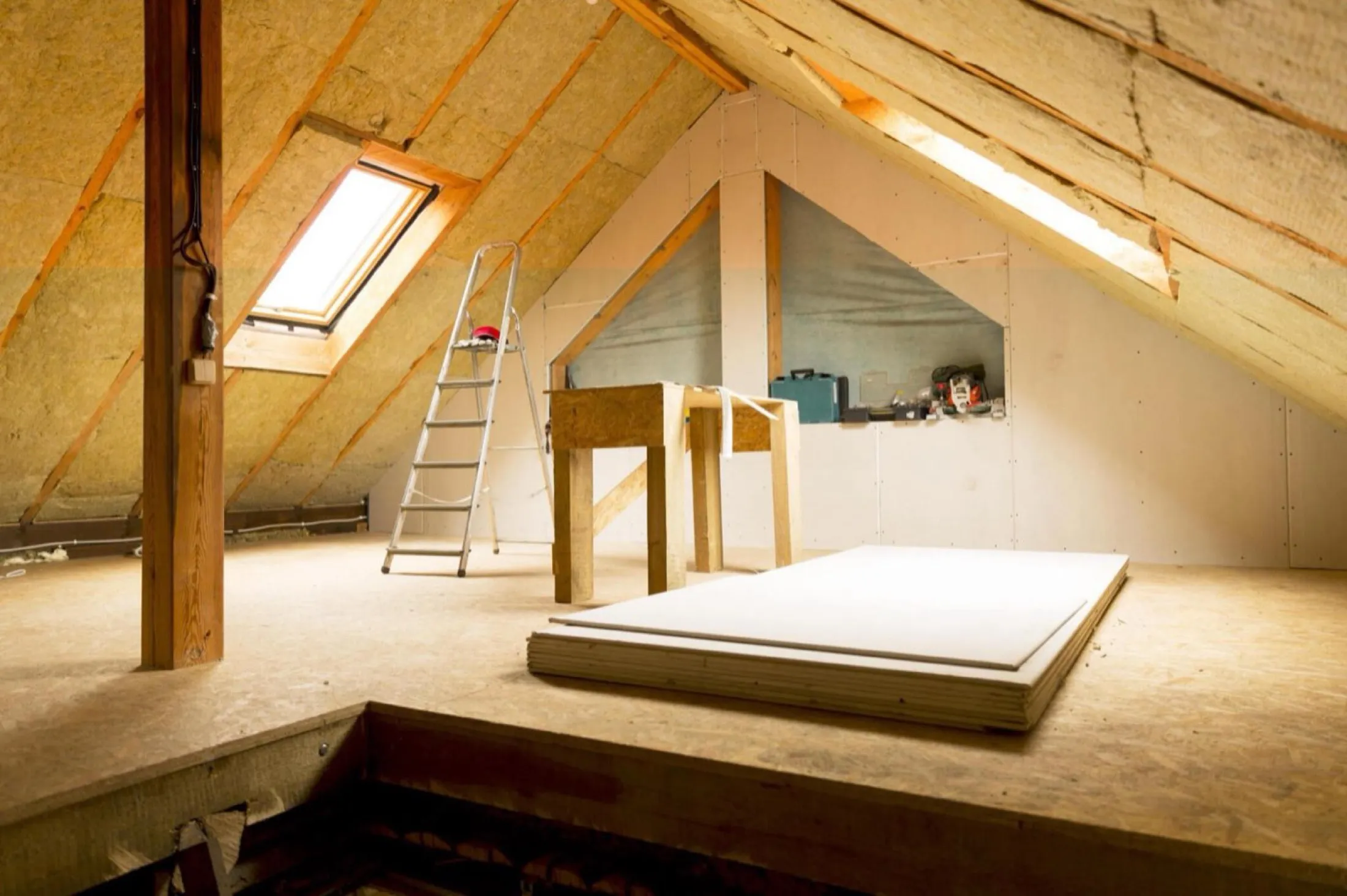
The preferred installation is foil stapled to the underside of the roof rafters, leaving an air gap between the foil and the deck above and an open attic below. This keeps the barrier surface vertical-ish, sheds dust, and maintains the air spaces on both sides that the physics require. In new construction, radiant barrier roof sheathing with foil factory-laminated to the deck is another common approach.
The worst placement in our dusty desert environment is foil laid flat on top of attic floor insulation. Dust accumulates on the upward face, and since dust raises emissivity, the barrier's performance erodes year over year exactly where the Valley's haboob seasons deposit the most material. If a bid proposes laying foil on the attic floor, that is a red flag. Proper rafter-hung installation costs more in labor and keeps working for decades, which is the trade worth making.
Radiant Barriers and Insulation Work Together
The correct mental model is layered defense. The radiant barrier reduces the heat reaching the top of the insulation blanket, which lowers the temperature gradient the insulation must resist. The insulation, at R-38 or better for climate zone 2B, then handles the conductive and convective load. Air sealing at the ceiling plane keeps attic air out of the living space. Each layer covers a different heat-transfer mechanism, and none of them substitutes for the others.
For older Tempe ranch homes, a common project sequence is air seal the ceiling plane, bring the attic floor to R-38 with blown material, and hang foil at the rafters. The combined effect on peak afternoon ceiling temperature is substantial, and the AC runtime drop is usually visible on the first summer bill. If your ducts run through the attic, the barrier also lowers the attic air temperature the ducts are sitting in, which reduces duct heat gain even with no duct work at all.
Ventilation Still Matters
A radiant barrier under the deck slightly raises deck temperature because heat that would have radiated into the attic now stays in the sheathing, and it lowers attic air temperature overall. Neither effect eliminates the need for balanced ventilation in a vented attic. Soffit intake and ridge or roof exhaust still need to move air to purge the heat and monsoon-season moisture that do accumulate.
During barrier installs we check the ventilation ratio and make sure foil placement does not block intake pathways at the eaves. If your attic is short on venting, we will say so, because adding a barrier to a stagnant attic gets you only part of the available benefit. Baffling the eaves and confirming exhaust are cheap fixes that make the whole system work.
Realistic Expectations and Typical Costs
Honest numbers: in hot climates with cooling-dominated loads and ducts in the attic, a correctly installed radiant barrier typically reduces cooling costs on the order of 5 to 10 percent, sometimes more in attics with poor existing insulation once the rest of the system is corrected. Field studies in Sun Belt climates have measured attic temperature reductions of 20 to 30 degrees at peak. Those are realistic ranges, not marketing ceilings, and your result depends on your insulation level, duct condition, and home orientation.
Installed foil radiant barrier in the Phoenix metro typically runs in the range of $0.50 to $1.25 per square foot of roof area depending on attic access and roofline complexity, so many Tempe attics land in the mid hundreds to low four figures. Those are typical market ranges, not a quote. Call Tempe Spray Foam Insulation at (480) 573-6554 and we will inspect the attic, tell you whether a barrier makes sense for your situation or whether insulation and sealing should come first, and price it in writing.
Talk to Us About Your Attic
Radiant barriers reward honest assessment and punish shortcut installation. We serve Tempe, Chandler, Mesa, Gilbert, and Ahwatukee, and we install insulation, air sealing, and barriers as one coordinated system. Call (480) 573-6554 to schedule an attic evaluation.
Real Arizona Projects
Other Insulation Services
Common Questions
Is radiant barriers a good fit for Tempe-area buildings?
Yes. Radiant Barriers works well for many Tempe-area homes and commercial buildings, but the right choice depends on the space, the assembly and how it is used. During a free estimate we confirm whether radiant barriers or another option fits your building.
How much does radiant barriers cost?
Cost depends on the area being treated, the material and thickness, access and prep. Estimates are free and given in writing, so you know the price before any work begins.
How long does a radiant barriers project take?
Most projects are completed quickly once scheduled. Your written estimate includes the expected timeline for your specific Tempe-area project.
Want to Know What Your Project Would Cost?
Tell us about the property and we'll help you determine the next step.
Free Written Estimates • No Obligation • Local Arizona Team