
Batt Insulation in Arizona
Fiberglass batt installation for walls, ceilings, and new construction.
Batt Insulation Installation in Tempe
Fiberglass batts are the most familiar insulation product in America, and they are also the most commonly installed wrong. Fitted correctly into the right cavities, batts deliver their rated R-value reliably and affordably. Fitted loosely, compressed, or gapped, they underperform badly. Tempe Spray Foam Insulation installs batt insulation the slow, correct way across Tempe, Chandler, Mesa, Gilbert, and Ahwatukee, and we will also tell you when batts are the wrong tool for the assembly you have.
Batten work is not the glamour end of the trade, but it matters. A garage conversion, a room addition, an interior wall that needs sound control, an attic knee wall, or a vaulted ceiling section all call for batts, and in each case the details of the install decide whether you get the number on the label. Call (480) 573-6554 and we will look at your specific cavities before recommending anything.
Where Batts Make Sense
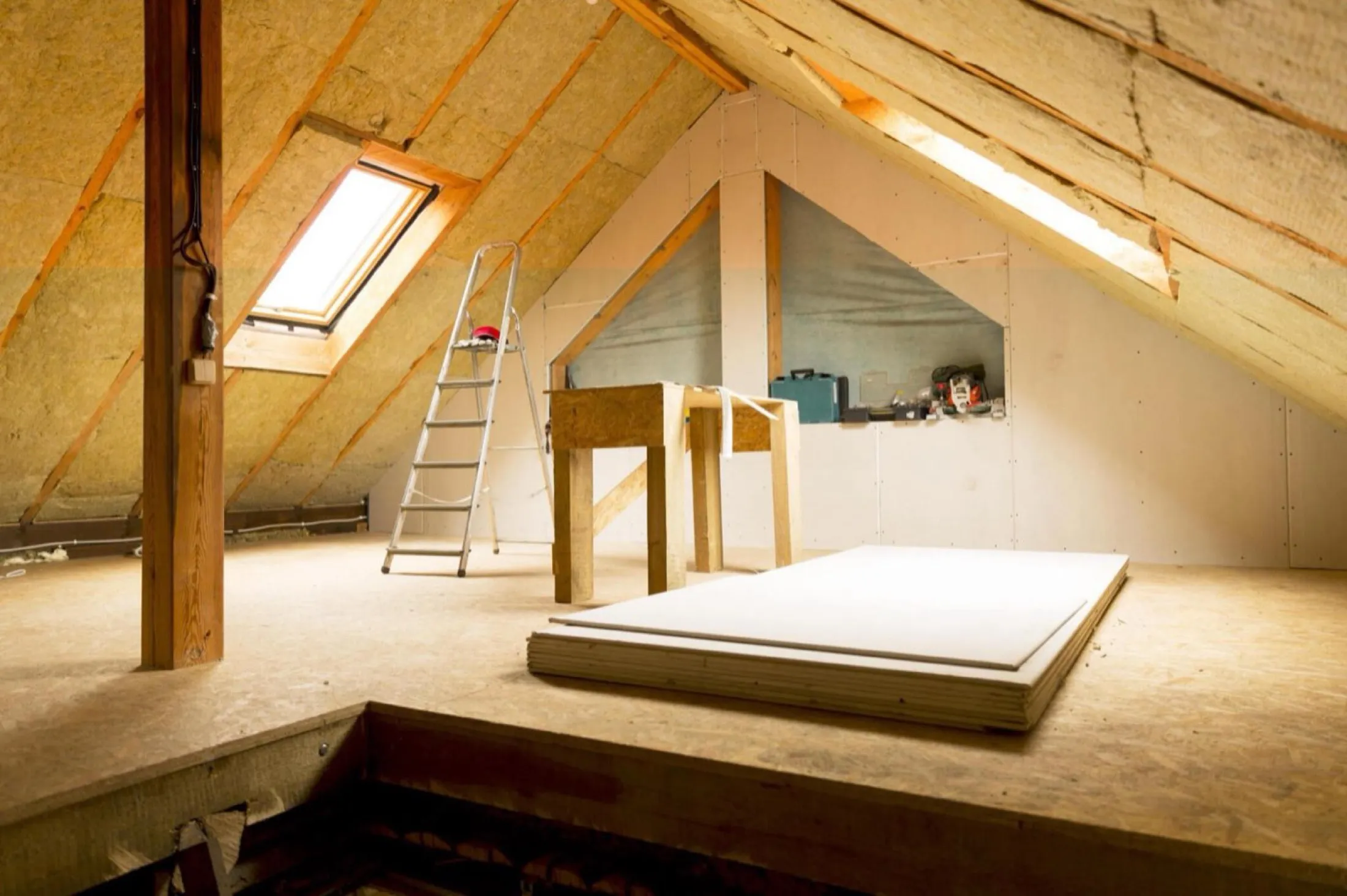
Batts are designed for open, accessible, regularly spaced framing: stud walls during remodels, floor systems over garages or crawl spaces, knee walls in attic rooms, and new framing in additions. In those conditions, a correctly sized batt fills the cavity fully, touches all six sides of the space, and performs at its rated value.
Batten products are a poor fit for closed existing walls you do not want to open, irregular cavities full of wiring and blocking, and open attics where blown material covers faster and more completely. Much of our batt work in Tempe is on remodels of 1960s-80s ranch homes, where walls get opened for kitchen or bath work and the opportunity to insulate properly appears for the first time since the house was framed. When the drywall is off, the labor case for batts is excellent.
R-Values and Sizing
Common fiberglass batt ratings map to standard framing: R-13 and R-15 for 2x4 walls, R-19 and R-21 for 2x6 walls and some floor systems, and R-30 or R-38 for attic floors and cathedral sections where depth allows. IECC climate zone 2B calls for roughly R-13 in framed walls and R-38 at ceilings, and batt selection should match the cavity depth so the product fills the space without compression.
Compression is the silent killer of batt performance. An R-19 batt squeezed into a 2x4 cavity does not deliver R-19; it delivers roughly the value of the depth it actually occupies, and you have paid for material that is doing nothing. The same logic applies to stuffing batts around pipes, junction boxes, and cross-bracing. We cut and fit around obstructions rather than mashing product behind them, which is slower and is also the only way the numbers hold.
Facing, Kraft Paper, and Vapor Questions
Batts come faced with kraft paper or foil, or unfaced. In cold climates the facing acts as a vapor retarder on the warm-in-winter side of the wall. In Tempe's hot-dry climate, vapor drive reverses for much of the year, pushing inward from hot humid monsoon air toward the conditioned interior, and the assembly dries differently than in heating climates.
In practice, much of Arizona construction uses unfaced batts in walls, with vapor management handled by the assembly as a whole rather than a kraft layer, and local code officials and building scientists generally favor assemblies that can dry. Where facing is specified, placement matters, and double vapor barriers that trap moisture between layers are a real failure mode we avoid. If your project has specific moisture concerns, such as a bathroom exterior wall or a below-grade transition, we will spec the facing question deliberately instead of by habit.
Why Batts Fail: The Install Details
Research on installation quality has shown that batts installed with gaps, compression, and misalignment can lose a quarter to half of their rated performance. The failure modes are consistent: batts cut short at the top and bottom of the cavity, split poorly around wiring so a void runs the full height of the wall, left proud of the studs so drywall bows, or stuffed behind obstacles leaving the front half of the cavity empty.
Correct installation means the batt is cut slightly oversized for friction fit, split around wiring so material sits both in front of and behind the wire, fitted around boxes and pipes with a knife rather than compressed, and in contact with the interior sheathing plane with no voids. It is not complicated, but it is labor, and labor is what cheap bids cut first. We install to the grade-one standard because anything less wastes the material you paid for.
Garages, Additions, and Interior Walls
Garage conversions are common in Tempe, and the wall between a garage and living space, plus any converted garage walls, benefit from proper batt insulation while framing is open. Conversions done years ago without permits often have no insulation at all, which is part of why converted rooms run hot in summer.
Interior walls are a different use case: sound control. Unfaced batts in bedroom, bathroom, and home office walls noticeably reduce sound transmission between rooms, and it costs very little while walls are open. For additions, we match batt spec to the new framing depth and coordinate with the air sealing details at the rim and top plates so the new space does not inherit the leakage habits of the old house. If you are planning a remodel or addition, call (480) 573-6554 early, because insulation decisions are cheapest before drywall goes up.
Batts vs Blown and Foam
Each product wins somewhere. Batts win in open framed cavities, especially during remodels, where they install fast, cost least per R-value in walls, and allow easy inspection. Blown insulation wins in open attics and closed wall cavities where filling around obstructions matters. Spray foam wins where air sealing, high R in shallow depth, or an unvented assembly is required.
We install all three, which is why we can be blunt about the comparison. If a wall is open, batts are usually the economical choice and foam is a premium upgrade. If the wall is closed, dense-pack or foam is the only real option. If the attic is open and vented, blown material usually beats batts on coverage speed and gap-free depth. The right answer follows the assembly, not the product line.
Typical Costs and Getting a Quote
Fiberglass batts are the lowest-cost insulation material per square foot, and professional installation in the Phoenix metro typically runs in the range of $0.75 to $1.75 per square foot installed depending on R-value, facing, access, and prep, with wall work during open remodels at the lower end and fiddly retrofit details at the higher end. Those are typical market ranges, not a quote for your project.
The honest way to price batt work is to walk the job, because labor dominates cost and labor depends on how many obstructions, odd cavities, and access problems your framing presents. Call Tempe Spray Foam Insulation at (480) 573-6554 and we will look at the actual cavities, spec the correct R-value and facing, and give you a written number before any work starts.
Faced vs Unfaced Batts and Why Facing Placement Matters in Climate Zone 2B
Batt insulation looks simple, but the faced versus unfaced decision trips up a lot of homeowners in the Tempe area. A faced batt has a kraft paper or foil layer attached to one side. That layer acts as a vapor retarder, and where you place it matters. In climate zone 2B, which covers Tempe, Chandler, Mesa, Gilbert, and Ahwatukee, we live in a hot dry climate where the moisture drive is mostly from the inside out during our mild winters and minimal the rest of the year. When a vapor retarder is used here, it belongs on the warm in winter side, which is the interior side of the assembly, the side facing your living space.
Put the facing on the wrong side and you create a moisture trap. We see this in garages and bonus rooms where someone stapled batts into wall cavities with the paper facing the exterior sheathing. In a cooling dominated climate like ours, that mistake is usually less catastrophic than it would be in the Midwest, but it can still hold humidity against the wrong surface and encourage mold in wall cavities that get any moisture intrusion.
Unfaced batts are the right call in several common situations. If you are adding a second layer of batts over existing attic insulation, always use unfaced. A faced batt laid on top of existing insulation puts a vapor retarder in the middle of the assembly, and that is a textbook way to trap moisture. Unfaced is also typical for interior sound control between rooms and floors, where no vapor retarder is needed at all.
One more local note: kraft facing is technically flammable if left exposed, so faced batts should never be left uncovered in an attic or garage. If the facing will remain exposed, the batts need to be covered with drywall or another approved finish. When we install batt insulation as part of a project, we match the facing choice to the assembly, orient it correctly, and make sure nothing is left in a condition that fails inspection or creates a fire risk. If you are not sure what is in your walls or attic right now, call us at (480) 573-6554 and we will take a look.
Real Arizona Projects
Other Insulation Services
Common Questions
Is batt insulation a good fit for Tempe-area buildings?
Yes. Batt Insulation works well for many Tempe-area homes and commercial buildings, but the right choice depends on the space, the assembly and how it is used. During a free estimate we confirm whether batt insulation or another option fits your building.
How much does batt insulation cost?
Cost depends on the area being treated, the material and thickness, access and prep. Estimates are free and given in writing, so you know the price before any work begins.
How long does a batt insulation project take?
Most projects are completed quickly once scheduled. Your written estimate includes the expected timeline for your specific Tempe-area project.
Want to Know What Your Project Would Cost?
Tell us about the property and we'll help you determine the next step.
Free Written Estimates • No Obligation • Local Arizona Team